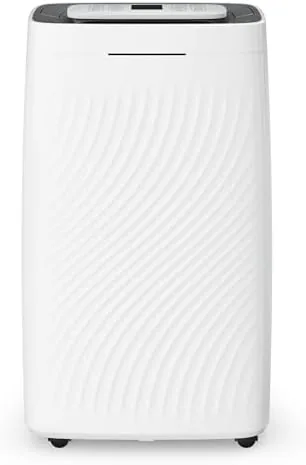
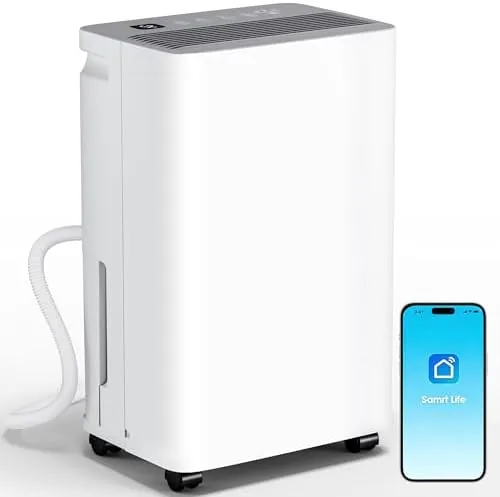
Tehanld — Dehumidifier
Engineered for Homeowners Battling Basement Dampness and Garage Moisture
Tehanld dehumidifier systems address a persistent challenge faced by homeowners, office managers, and anyone responsible for maintaining comfortable indoor environments. Excess moisture creates conditions for mold growth, musty odors, and structural damage that silently compromise living spaces. The brand developed its dehumidifier lineup specifically for those managing large areas like basements, garages, and multi-room homes where standard portable units fall short.
The target audience extends beyond residential users to include small business owners maintaining stock rooms, gaming enthusiasts protecting expensive electronics, and families seeking healthier air quality throughout their homes. These users share a common need for reliable, high-capacity moisture removal without the noise disruption or energy waste associated with industrial equipment. Tehanld bridges this gap with units sized for real-world residential and commercial applications.
Every unit in the collection reflects an understanding that moisture control is not a luxury but a necessity for property protection and personal comfort. Whether combating seasonal humidity spikes in a finished basement or maintaining consistent conditions in a climate-sensitive storage area, the brand delivers solutions calibrated to actual user needs rather than laboratory ideals.
Coverage Options from Compact Rooms to Entire Home Environments
The product range spans multiple capacity tiers, ensuring appropriate solutions for spaces as intimate as a single bedroom or as expansive as a 5,000 square foot basement. Entry-level 30-pint models handle standard rooms and moderate humidity challenges, while the flagship 80-pint unit tackles extreme moisture conditions in the largest residential and light commercial applications. This graduated approach prevents both underpowered performance and unnecessary energy expenditure.
Each capacity tier maintains consistent core features including smart humidity control, 24-hour programmable timers, and child safety locks. The progression from 30-pint to 50-pint to 80-pint models follows logical coverage increments, making selection straightforward based on room dimensions. All units accept continuous drain hoses for hands-free operation, eliminating the need for manual tank emptying in high-humidity environments.
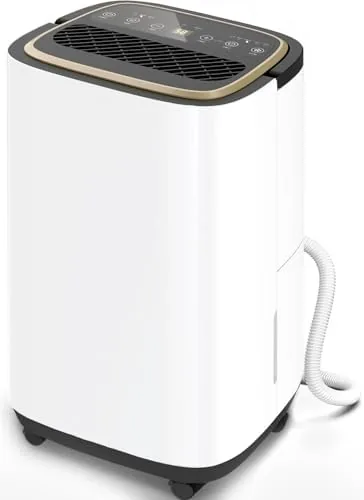
The lineup accommodates varied installation scenarios through thoughtful design elements. Caster wheels enable repositioning between rooms, while the drain hose option suits permanent basement installations. This flexibility means a single unit can serve temporary needs during renovation projects and then transition to permanent placement in a finished space.
Heavy-Duty Compressor Technology for Rapid Humidity Reduction
The engineering philosophy centers on compressor-driven dehumidification, a deliberate choice over desiccant alternatives for high-volume moisture extraction. Heavy-duty compressors in each unit pull humidity levels from a saturated 90% down to a comfortable 30%, accomplishing in minutes what lesser systems require hours to achieve. This rapid response proves critical when addressing acute moisture events like flooding or seasonal humidity spikes.
Compressor selection reflects extensive testing across temperature and humidity ranges encountered in real basements and garages. Unlike budget models that struggle in cooler environments, these units maintain extraction efficiency even in the lower temperatures typical of below-grade spaces. The engineering team optimized refrigerant cycles specifically for the challenging conditions where dehumidifiers are most needed.
Noise management accompanies power delivery through vibration-dampening mounts and optimized fan blade geometry. The 80-pint model operates at approximately 40 decibels, comparable to a quiet conversation, while smaller units run even quieter. This acoustic profile allows continuous operation in living spaces, bedrooms, and home offices without the intrusive drone associated with industrial equipment.
Energy efficiency remains central to compressor design, with units drawing only the power necessary for current humidity conditions. Once target levels are achieved, the system cycles down rather than running continuously, reducing electrical consumption significantly over 24-hour operation periods. Smart sensors continuously monitor ambient conditions and adjust compressor output accordingly.
Tehanld Dehumidifier Smart Features That Simplify Humidity Management
- Intelligent Humidity Sensors Built-in sensors continuously monitor ambient moisture levels and automatically adjust extraction rates to maintain your selected target humidity, eliminating constant manual adjustment.
- 24-Hour Programmable Timer Schedule operation during off-peak electricity hours or coordinate with your daily routine, allowing the unit to work when most convenient and energy-cost-effective.
- Continuous Drain Capability Included drain hose connects directly to floor drains or utility sinks, enabling unattended operation for days or weeks without manual tank emptying.
- Child Safety Lock Control panel lock prevents curious children from adjusting settings or accidentally turning the unit off, maintaining consistent protection in family environments.
- Multiple Operating Modes Select from various modes including maximum extraction for severe moisture events, economy mode for maintenance operation, and continuous mode for acute humidity control.
- LED Display with Humidity Readout Digital display shows current humidity percentage, target settings, tank status, and operational mode at a glance without navigating complex menus.
- Auto-Restart After Power Outage Units remember their settings and automatically resume operation when power returns, maintaining protection even during temporary electrical interruptions.
Top Performers: The Units Customers Choose Most Often
The 5000 Sq.Ft Dehumidifier for Basement with Drain Hose in the 50-pint configuration consistently ranks as the most popular choice among homeowners with standard to large basements. This upgraded model combines sufficient capacity for whole-home moisture management with energy efficiency that keeps operating costs reasonable. Customers particularly value its ability to reduce humidity from 90% to 30% rapidly, addressing both chronic dampness and acute moisture events effectively.
For spaces with extreme moisture challenges, the 80 Pint Dehumidifier for Basement with Drain Hose delivers maximum extraction power. Its 1.6-gallon tank handles substantial water collection when drain hose installation is not practical, while four distinct operating modes allow precise calibration to varying conditions. The 40-decibel operation level makes it suitable for finished basements serving as entertainment spaces or home offices.
The 35 Pint Large Best Compressor Dehumidifier serves customers with medium-sized spaces up to 2,500 square feet who want robust performance without over-sizing. This 2026 upgraded model achieves visible results within 10 minutes of operation, protecting floors, walls, and furniture from moisture damage. Its balanced capacity makes it ideal for split-level homes where basement and main floor humidity both need attention.
Budget-conscious buyers gravitate toward the 30 Pint Large Best Compressor Dehumidifier, which covers spaces up to 3,000 square feet despite its modest capacity rating. The upgraded heavy-duty compressor in this model punches above its weight class, making it appropriate for laundry areas, bedrooms, and smaller basements where extreme extraction capacity would be wasteful.
Compressor Components, Housing Materials, and Filter Construction
Each unit houses a commercial-grade rotary compressor engineered for continuous operation cycles. These compressors use environmentally responsible refrigerants that deliver efficient heat exchange while meeting current environmental standards. The compressor mounting system isolates vibration from the housing, preventing the rattling and buzzing common in lesser dehumidifiers during extended operation.
Exterior housings combine impact-resistant ABS plastic panels with reinforced internal frames. This construction withstands the minor impacts inevitable in basement and garage environments without cracking or losing structural integrity. The housing design incorporates strategic ventilation louvers that direct airflow for maximum moisture contact while preventing debris intrusion into sensitive mechanical components.
Removable air filters capture dust, pet dander, and airborne particles before they reach the evaporator coils. These washable filters maintain performance indefinitely when cleaned according to the maintenance schedule, eliminating recurring filter replacement costs. The filter housing design allows tool-free removal and reinstallation in seconds, encouraging regular maintenance that extends unit lifespan.
Internal condensate collection systems use corrosion-resistant materials throughout the water pathway. From the evaporator coils through the collection basin to the drain port, every component tolerates continuous water contact without degradation. The drain hose connection features a secure fitting that prevents accidental disconnection and associated water spillage.
Moisture Elimination Results in Basements, Garages, and Living Spaces
Users consistently report measurable humidity reduction within the first hour of operation, with basement environments reaching target levels overnight. The heavy-duty compressor technology proves its worth during challenging conditions such as spring thaw periods or summer humidity spikes, maintaining consistent extraction rates when other units struggle. Finished basements become usable living spaces rather than musty storage areas.
Durability testing across thousands of operation hours confirms reliable performance over multi-year service periods. The compressor systems maintain their extraction efficiency without the gradual capacity loss that plagues entry-level dehumidifiers. Users operating units for three or more years report continued satisfaction with moisture removal capabilities matching initial performance levels.
Energy consumption measurements verify efficient operation that does not dramatically impact monthly electricity bills. The smart humidity sensors prevent wasteful continuous operation once target levels are achieved, cycling the compressor only as needed to maintain conditions. Users with electricity monitoring equipment confirm daily consumption figures well below theoretical maximum draw ratings.
Noise levels in real-world deployment match specification claims, with units operating quietly enough for placement in bedrooms, home offices, and media rooms. The combination of isolation mounts, optimized fan blades, and vibration-dampening construction creates an acoustic profile that fades into background awareness rather than demanding attention. Overnight operation near sleeping areas generates no complaints from family members.
How to Position and Operate Your Tehanld Dehumidifier for Maximum Extraction
- Central Room Placement Position the unit away from walls and furniture, allowing unobstructed airflow on all sides for maximum moisture contact with the evaporator coils.
- Level Surface Requirement Place on a flat, level floor to ensure proper condensate drainage into the collection tank and accurate tank-full sensor operation.
- Drain Hose Configuration For continuous operation, route the included drain hose to a floor drain or utility sink, maintaining a slight downward slope throughout the hose run.
- Target Humidity Selection Set the target between 45% and 55% for general comfort and mold prevention, lower settings for specific preservation needs.
- Timer Programming Schedule operation during utility off-peak hours when possible, or program continuous operation in high-humidity environments.
- Door and Window Management Keep doors and windows in the treated area closed during operation to prevent introduction of additional humid air.
- Air Circulation Enhancement Use in conjunction with ceiling fans or air circulators in large spaces to help distribute dry air throughout the room.
Temperature Ranges, Operating Conditions, and Electrical Requirements
Safe Operating Conditions
- Temperature range: 41°F to 95°F (5°C to 35°C)
- Humidity range: 30% to 95% RH
- Standard 120V household outlets
- Grounded three-prong connection required
- Indoor use only, protected from direct water contact
Conditions to Avoid
- Temperatures below freezing cause coil icing
- Direct sunlight exposure affects sensor accuracy
- Dusty environments require more frequent filter cleaning
- Extension cords may cause voltage drop issues
- Outdoor or wet location use voids warranty protection
Perfect Match for Property Owners Managing Multiple Moisture-Prone Areas
Homeowners with below-grade living spaces represent the core beneficiary group for these units. Whether managing a finished basement family room, a below-grade home gym, or a storage area containing valuable items, these users need reliable moisture control that operates autonomously. The continuous drain option particularly appeals to this group, eliminating the need for daily tank-emptying routines.
Landlords and property managers overseeing multiple units find value in the combination of reliability and low maintenance requirements. The auto-restart feature ensures protection continues even through temporary power interruptions, while durable construction reduces service calls and replacement frequency. Units deployed in rental properties maintain tenant satisfaction while protecting property value.
Hobbyists and collectors maintaining climate-sensitive materials benefit from precise humidity control. Whether protecting woodworking supplies, musical instruments, wine collections, or archival documents, consistent moisture levels prevent warping, mold, and degradation. The digital display and smart sensors provide confidence that conditions remain optimal even without constant monitoring.
Home office workers spending extended hours in basement or converted garage spaces appreciate both the humidity control and the quiet operation. These units create comfortable working environments without the distraction of mechanical noise, addressing a practical need that emerged as remote work became permanent for many professionals.
Selecting the Right Dehumidifier Capacity for Your Space
Room size provides the primary selection criterion, with capacity ratings expressed in square feet of coverage. The 30-pint models suit spaces up to 3,000 square feet with moderate humidity, while 50-pint versions extend coverage to 5,000 square feet. The 80-pint flagship handles the most challenging large-area applications with its enhanced extraction rate and larger tank capacity.
Humidity severity influences sizing decisions beyond simple square footage calculations. A moderately damp 4,000 square foot basement might perform well with a 50-pint unit, while a severely moisture-affected 3,000 square foot space could benefit from the same capacity. Consider local climate conditions, water table proximity, and historical moisture problems when evaluating your needs.
Multiple smaller units sometimes outperform single large units in complex floor plans with separated rooms or L-shaped configurations. Air circulation limitations in segmented spaces prevent single units from reaching distant areas effectively. Two 30-pint units placed strategically often deliver better whole-home results than one 50-pint unit positioned centrally.
Future flexibility deserves consideration in the selection process. Purchasing slight overcapacity provides headroom for unusually humid seasons or expansion of treated areas. The energy efficiency of these units means oversizing does not dramatically increase operating costs, as the smart controls prevent wasteful operation once target humidity is achieved.
Tehanld Dehumidifier Performance Compared to Leading Alternatives
| Feature | Tehanld | Frigidaire | hOmeLabs |
|---|---|---|---|
| Maximum Coverage Area | 5,000 sq ft | 4,500 sq ft | 4,500 sq ft |
| Highest Capacity Option | 80 pints/day | 70 pints/day | 50 pints/day |
| Continuous Drain Included | Yes, hose included | Yes, hose included | Adapter sold separately |
| Noise Level (Large Unit) | 40 dB | 51 dB | 48 dB |
| Smart Humidity Control | Auto-sensing with display | Basic humidistat | Digital with memory |
| Child Safety Lock | Standard on all models | Select models only | Not available |
| Auto-Restart Function | Yes | Yes | Yes |
| Timer Options | 24-hour programmable | 24-hour programmable | On/off only |
| Tank Capacity (Large Unit) | 1.6 gallons | 1.1 gallons | 1.8 gallons |
| Operating Modes | 4 modes | 2 modes | 2 modes |
Specifications based on manufacturer published data for comparable capacity models. Performance may vary by specific model and operating conditions.
Filter Cleaning, Tank Maintenance, and Seasonal Storage Procedures
- Weekly Filter Inspection Remove the filter and check for dust accumulation. In dusty environments, visual inspection helps determine if immediate cleaning is necessary before the standard two-week interval.
- Filter Washing Technique Rinse the filter under lukewarm running water, gently rubbing to dislodge trapped particles. Allow complete air drying before reinstallation to prevent mold growth on damp filter material.
- Tank Cleaning Schedule Empty and wipe the collection tank weekly during active use. Monthly deep cleaning with mild soap prevents bacterial growth and maintains the tank-full sensor accuracy.
- Drain Hose Flush When using continuous drainage, disconnect and flush the hose monthly to prevent algae buildup that could create blockages or odors.
- Coil Inspection Annually check the evaporator coils visible through the intake grille. Vacuum any accumulated dust using a brush attachment to maintain heat exchange efficiency.
- Seasonal Storage Preparation Before extended storage, run the unit on fan-only mode for several hours to dry internal components completely. Store upright in a clean, dry location.
- Restart After Storage Let the unit stand upright for 24 hours before operating after storage or transport to allow refrigerant to settle properly in the compressor.